
The studio

We tell you what can be woven before you commit.

Seventy to eighty developments leave this studio every month, and about a third reach bulk. The rest matter too: a design that cannot be woven at the count and the price you need is better known in week one than in week nine. Seven people work here — three on jacquard, four on dobby, on the loom makers' own software.
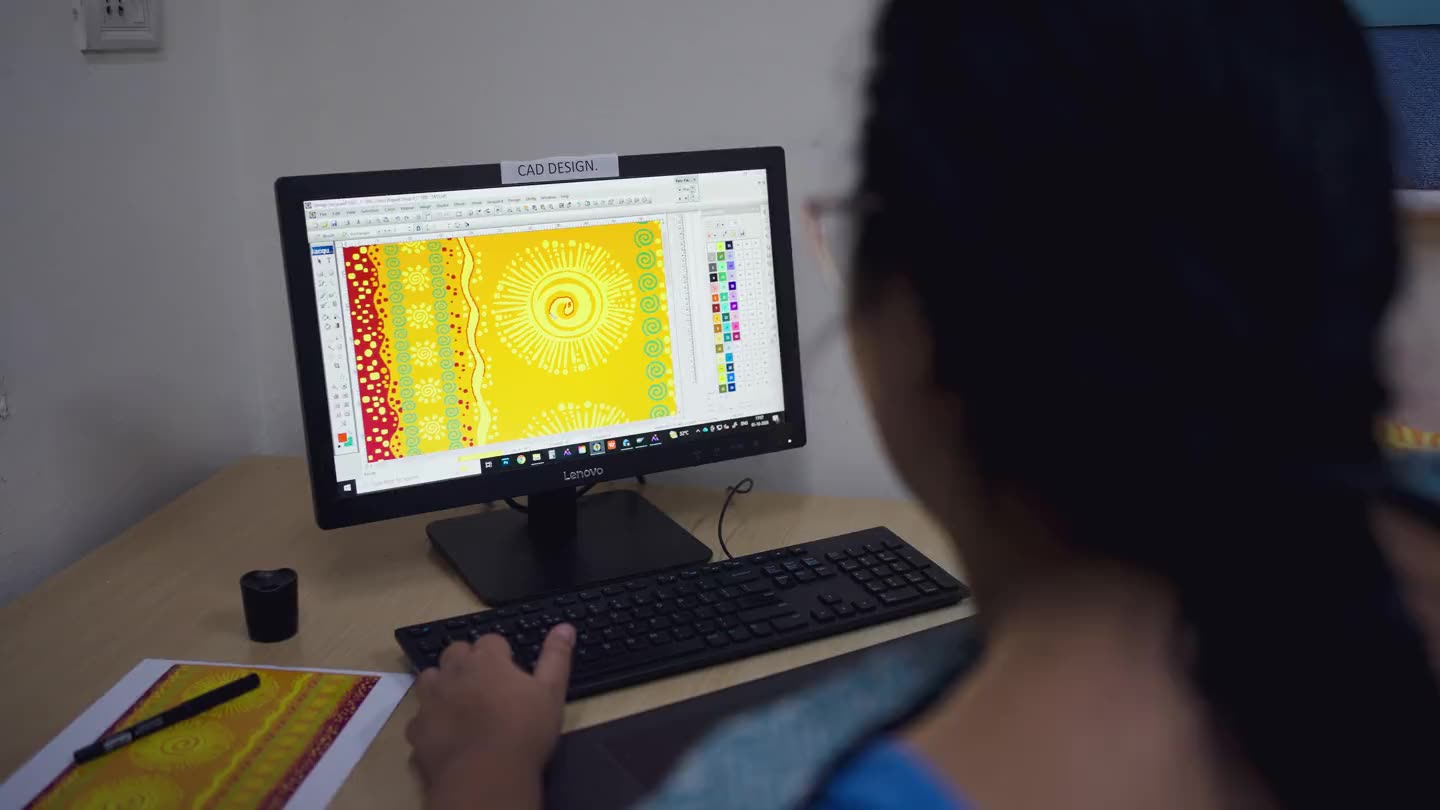
A designer at the screen in the studio, the artwork open in front of her.

The development sequence — days from brief

  1. By day 3

    Brief

    Merchandising sends the studio your design, your colours and your season. The development is punched into the system.

  2. By day 5

    Drawing

    The studio produces CADs where they are needed and sends them to you for approval.

  3. By day 10

    Colour

    The lab develops each shade against your standard or your Pantone reference, and returns three options.

  4. By day 23

    Sample

    Once approvals are in, the sample is warped, woven, dyed, finished and dispatched. Two weeks piece dyed; around twenty-five days yarn dyed.

  5. On approval

    Bulk

    The order is punched against the approved sample. Bulk follows the sample, not the drawing.

What you can send us

  • A reference towel — still the most useful thing you can send
  • Your own artwork file — TIF or AI
  • A Pantone reference, or a physical colour standard
  • A CAD from another supplier
  • A photograph, if that is all you have

If the resolution is too low to work from, we will ask for better rather than guess. If the design cannot be woven as drawn, we will send back the versions that can be — that conversation is the studio's job, and it is easier to have in week one.

The colour lab

Your standard arrives as a physical sample or a Pantone reference. The lab prepares the fabric or the yarn, selects dyes for that shade, and returns three options — a, b and c. You pick one.

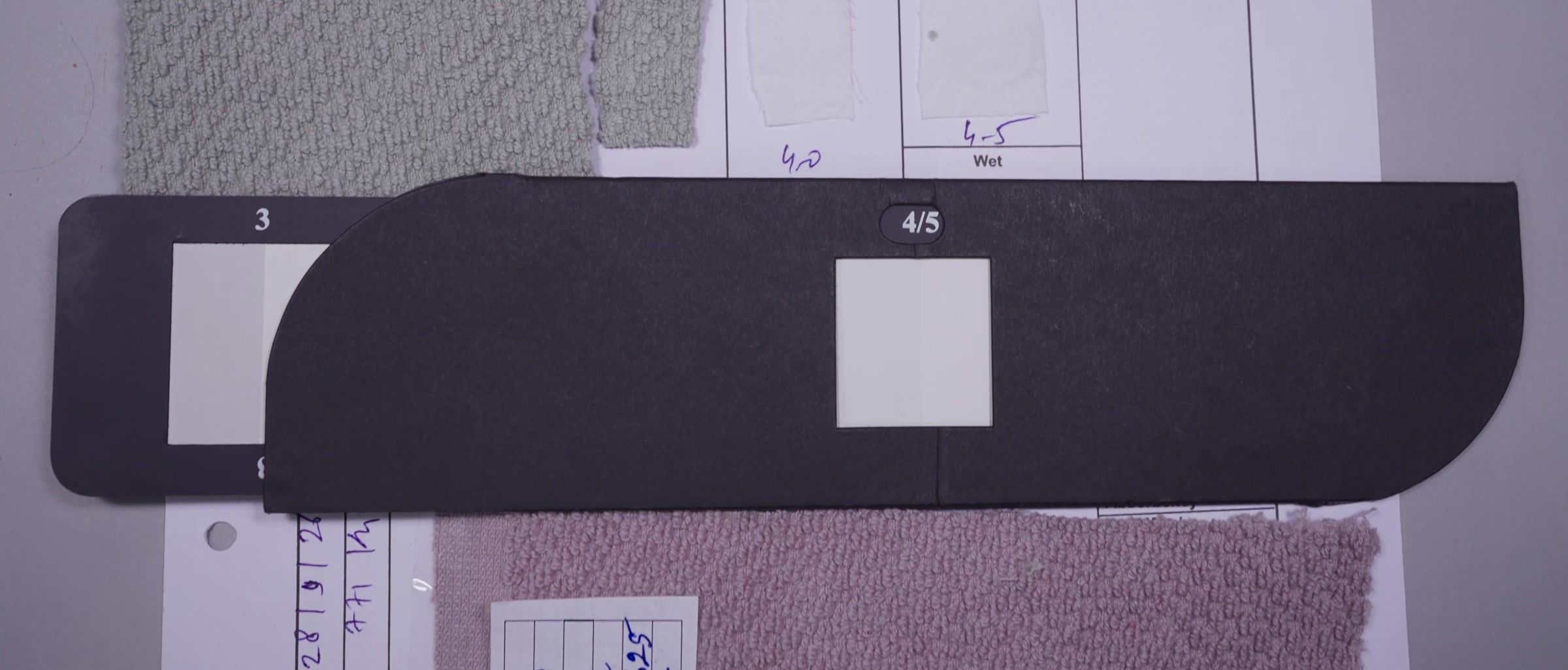
Everything afterwards is measured against that dip. ΔE under 0.8 means the difference can be read on an instrument but not by eye. If a bulk lot drifts, it is reprocessed rather than shipped.

A piece-dyed continuity card: swatches pinned beside a grey scale, with the shade ratings written in.