
Nalagarh, Himachal Pradesh
Yarn in at one end. Towels, robes and bedding at the other.
Sara is a terry composite mill: preparatory through to finishing and packing, on one site. We do not spin — yarn is bought to specification from four or five Indian mills, which is what lets us match a count or an origin to your programme rather than to our own spinning schedule. Towels are the business; robes and knitted jersey bedding come off the same line.
- 500 MTFinished goods in a typical month
- 930 tRice husk burned a month · both boilers, no fossil fuel
- OEKO-TEX STePCertificate 24000321 · Hohenstein · valid to 31 January 2029
The terry line — seven stations
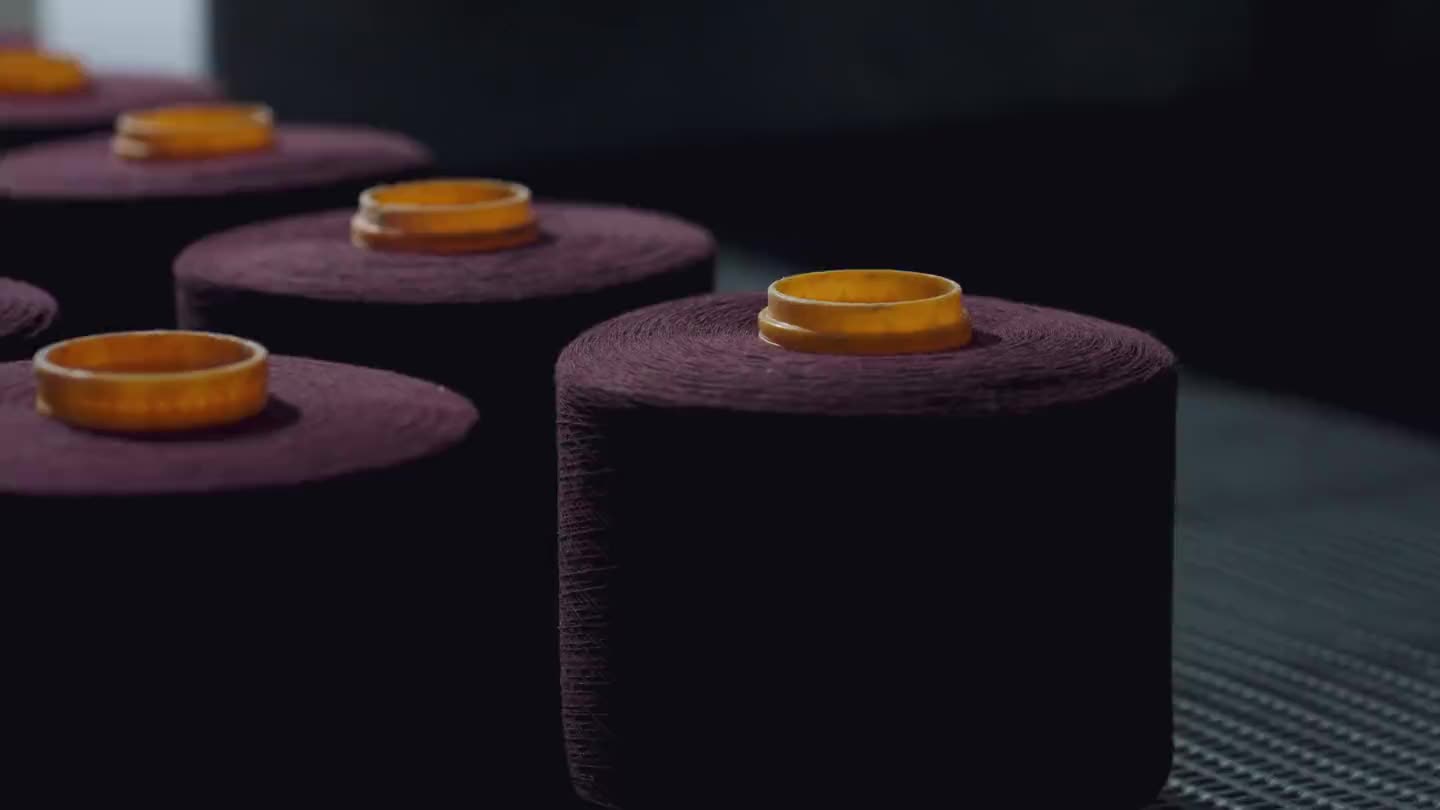
Station 01
Yarn store
Yarn is tested before it is ours. Count and quality are checked on arrival, and a goods receipt is raised only once the lot passes. A mill that spins its own yarn inherits whatever it made; we can reject a lot and send it back.
It is an unglamorous place to start a quality story, but since we buy rather than spin, this is genuinely where ours begins.
- Suppliers
- Four to five, all Indian
- Counts
- 10s and 12s OE · 2/24, 20s and 16s ring
- Speciality
- Organic · Egyptian · bamboo · zero-twist
- Tested
- Count and quality, before goods receipt
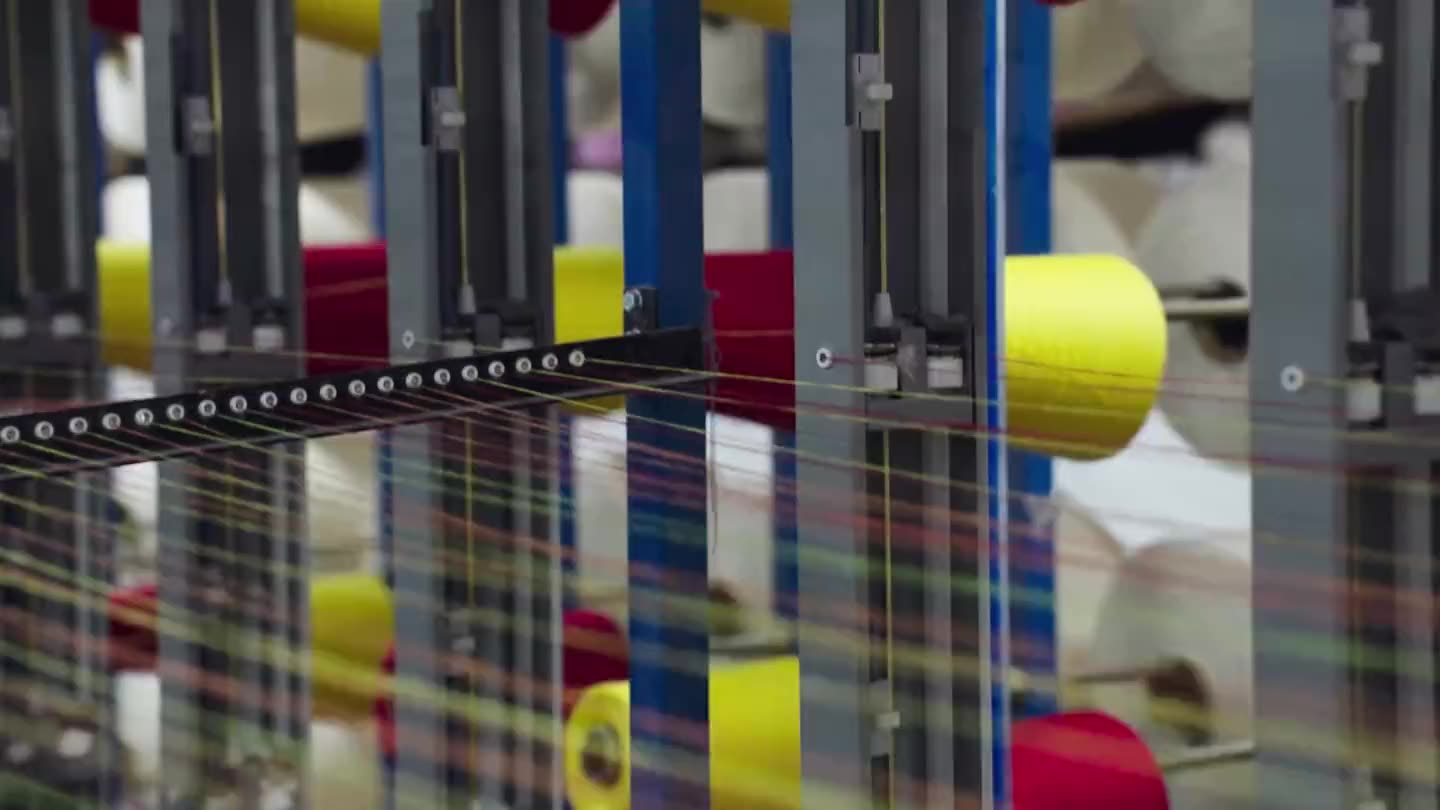
Station 02
Warping
Yarn is wound from cones onto a beam at the width and the end-count the design needs. Direct warping for plain grounds; sectional where a yarn-dyed pattern means the stripe order has to be built into the beam itself.
Warping and sizing are separate operations here, which is why this line has seven stations where most mills draw six.
- Machines
- Jupiter J/D1250 direct · Prashant Gamatex GESP-1250 and MPC-1250 sectional · Rabatex RI 107 S
- Types
- Direct and sectional
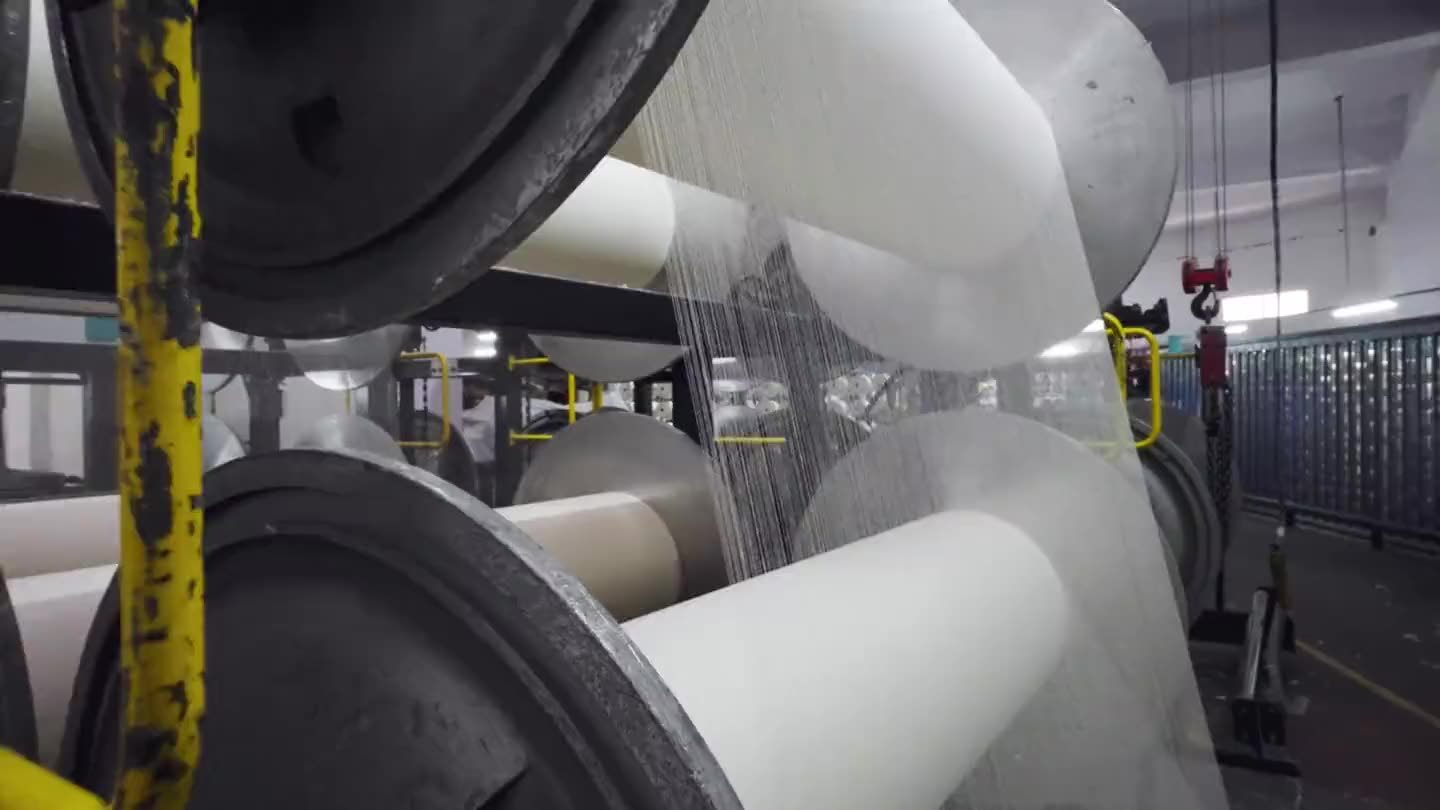
Station 03
Sizing
Warp yarn is coated so it survives the friction of the loom. Under-sized warp breaks and stops the loom; over-sized warp stiffens the cloth and has to be washed back out later.
Nobody asks about this station on a mill visit. It decides how well the next one runs.
- Machines
- Jupiter multi-cylinder · Prashant Gamatex Pacesetter-A
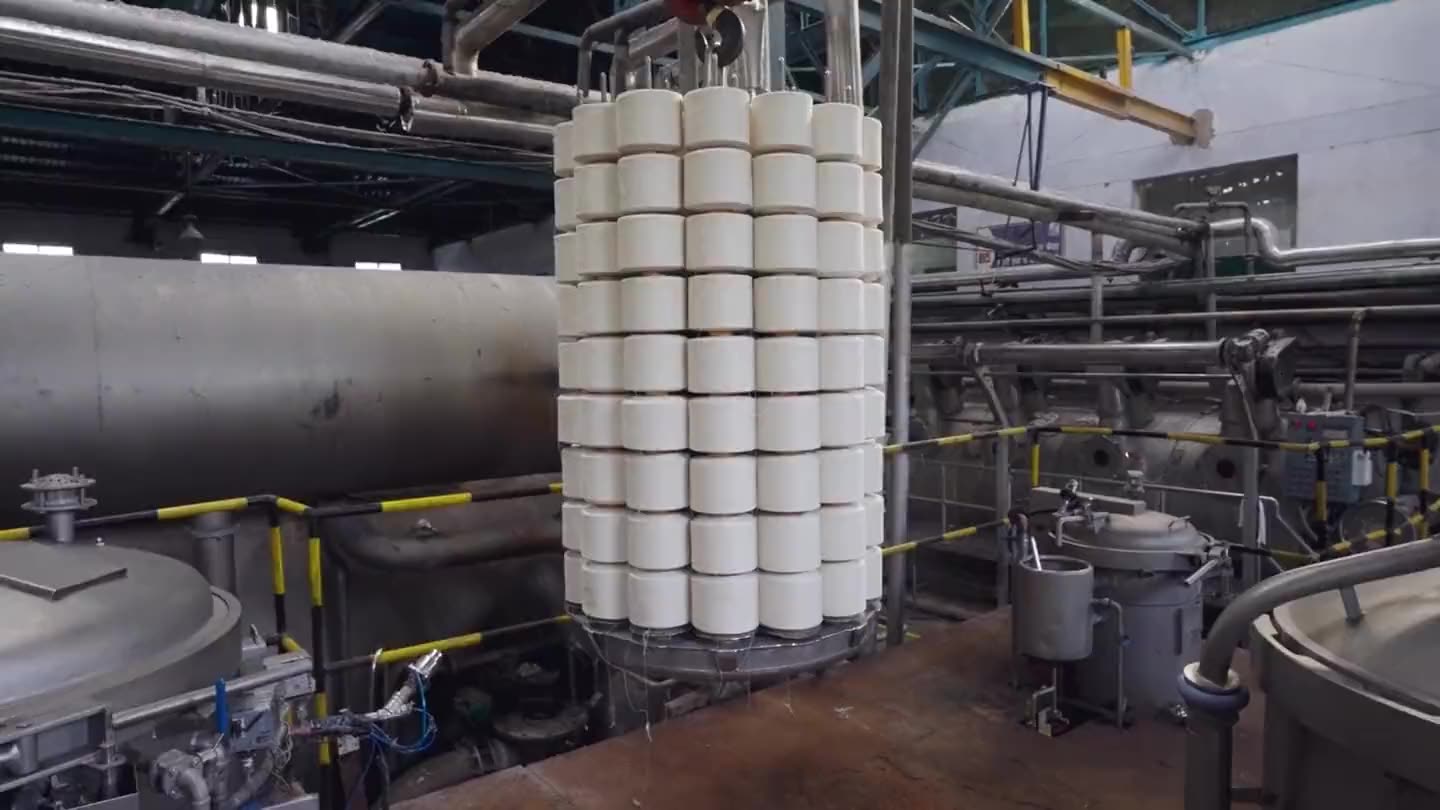
Station 04
Yarn dyeing
The alternate route. Where the colour has to be in the yarn rather than on the cloth — stripes, checks, most jacquard — yarn is package-dyed before it ever reaches a loom.
It takes longer and it costs more. For some designs it is the only way to get the result, which is a conversation worth having at the brief rather than at the sample.
- Share
- About 30% of volume
- Method
- Package dyeing
- Effect on sampling
- 4–5 weeks rather than 3
- Machines
- Fongs Allwin package dyeing, 53 to 145 kg · Fongs Labwin-3 for 5 kg lab lots · SSM PS6-W/D soft winding
Station 05
Weaving
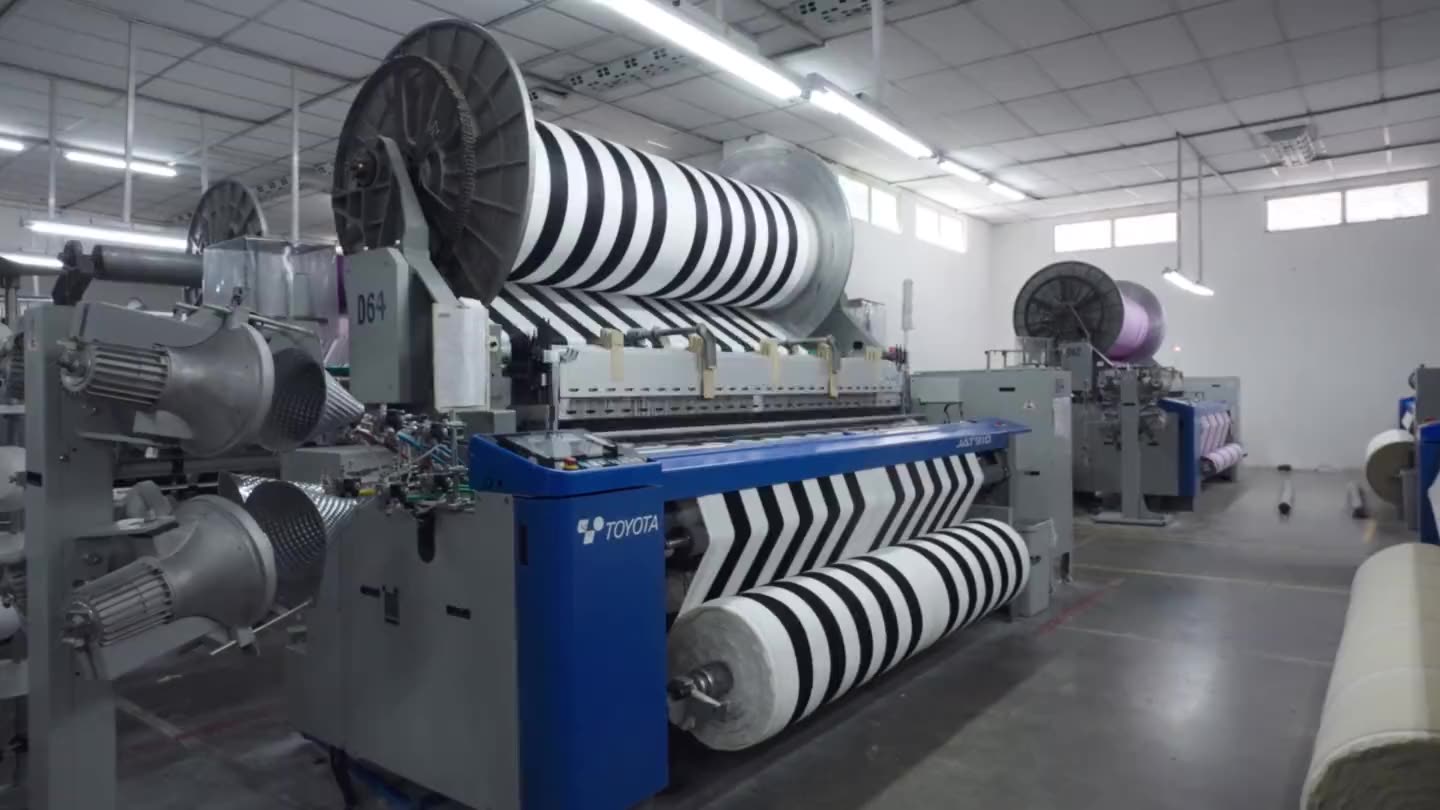
A hundred and six looms run at Nalagarh — eighty-two dobby and twenty-four jacquard. Dobby carries the volume. Jacquard takes the designs dobby cannot: twelve Toyota looms fitted with Stäubli heads and twelve Vamatex with Bonas. That is the part of the plant the studio leans on hardest when a buyer's artwork is ambitious.
Weaving is one of two ways we make cloth. Jersey for bedding is knitted instead — the yarn goes straight from the store to the knitting machines, passing neither warping, sizing nor a loom — and rejoins the same dyeing, finishing and made-up route afterwards.
Looms are the constraint on the whole site. It is why a sample takes three weeks rather than one, and we would rather explain that than quote a date we would miss.
- Looms
- 106
- Dobby
- 82 — Tsudakoma ZAX-9100 and ZAX-E, Toyota JAT-910, Vamatex Dyna Terry
- Jacquard
- 24 — twelve Toyota with Stäubli heads, twelve Vamatex with Bonas
- Fleet
- Tsudakoma ZAX-9100 (42) and ZAX-E (12) · Toyota JAT-910 (36) · Vamatex Dyna Terry (16)
- Widths
- 340 · 280 · 250 cm
- Also made here
- Knitted jersey, for bedding
Station 05 · branch
Knitting
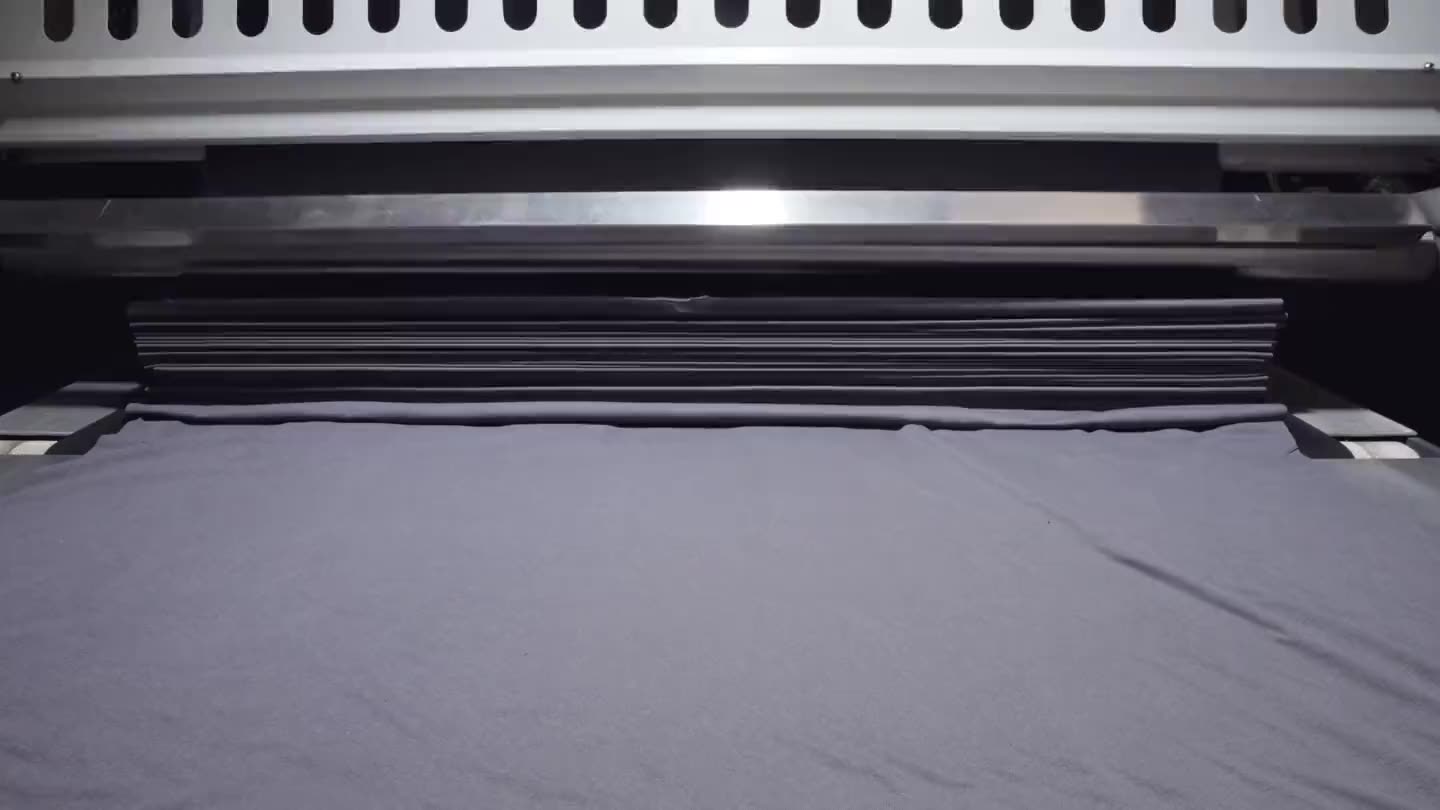
Weaving is one of two ways we make cloth. Jersey for bedding is knitted instead, on circular machines here at Nalagarh — the yarn goes from the store straight to them, and passes no warping, no sizing and no loom.
From there it rejoins the terry route: piece dyed in the same dye house, then cut, stitched and packed. A buyer can take towels and the bed linen that goes with them from one mill, in shades matched to each other rather than to two suppliers’ cards.
- Products
- Sheets, bed covers, pillowcases
- Knitted
- At Nalagarh, circular · none put out
- Yarn
- Direct from the store
- Dyeing
- Piece dyed, in the same dye house as towelling
Station 06
Dyeing, bleaching and finishing
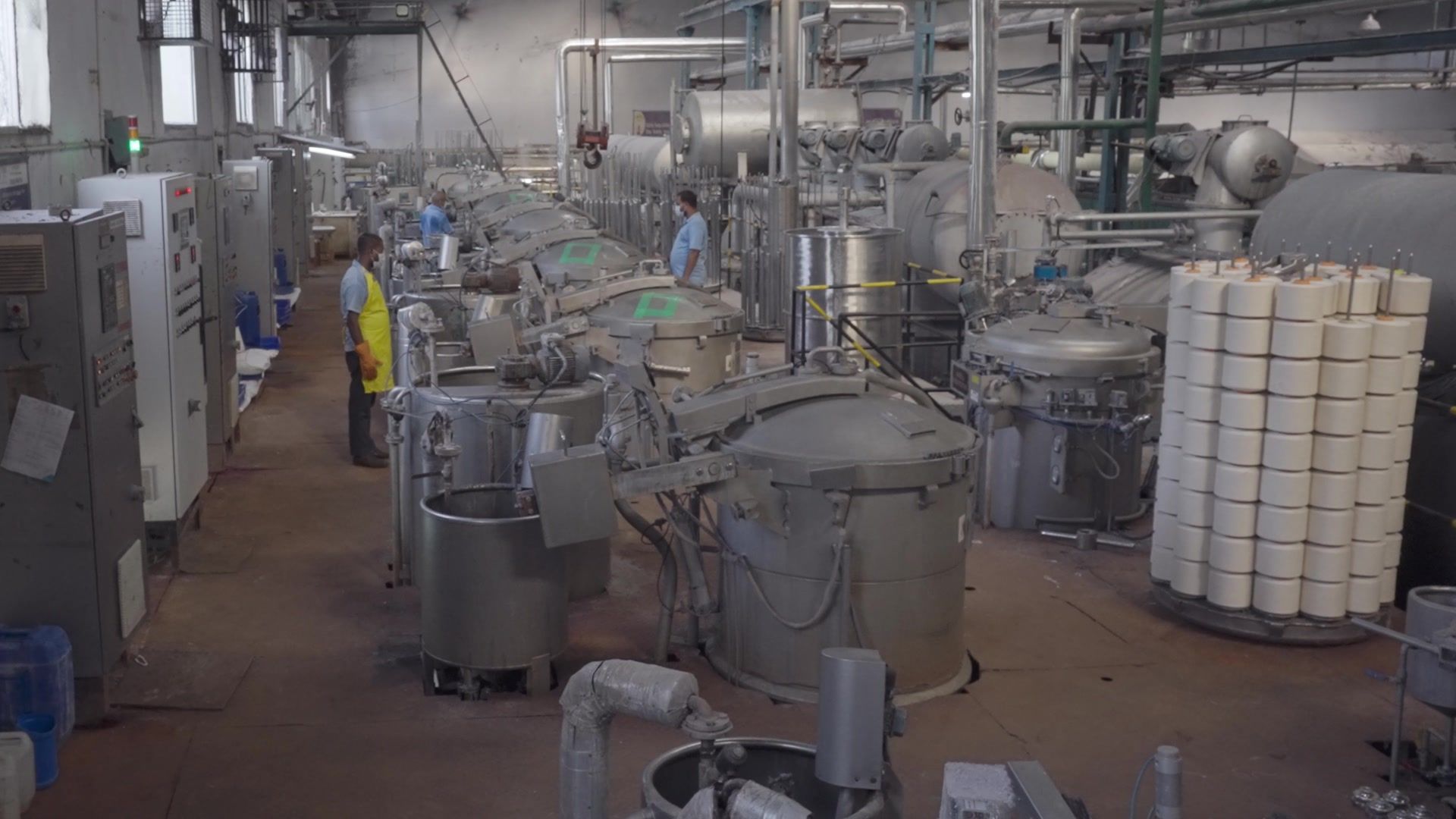
Cloth is bleached first — always in that order — and then piece dyed, which is where seventy per cent of what we make takes its colour rather than at the yarn stage. After the dye house it is dried, sheared where the construction calls for it, and finished.
Shearing is also how velour is made. The top of the pile is cut away, so the face of the cloth reads as velvet rather than as loops — the same terry, off the same loom, given a different hand by a decision taken here.
Every lot is held against the dip the buyer approved, not against the lot before it. Matching each run to the previous one is how a shade drifts a long way over a programme without any single step looking wrong. A lot that drifts is reprocessed rather than shipped.
- Sequence
- Bleach, then dye, dry, shear, finish
- Share
- About 70% piece dyed
- Shade
- ΔE < 0.8 against approved dip
- Absorbency
- Wick test under 5 seconds
- Velour
- Made here — sheared terry, not a different cloth
- Also dyes
- Robe and jersey cloth, not only towelling
- Machines
- Thies Eco-Master and Eco-Flow · Peninsula 1,200 and 1,800 kg · Harish Supra-5 three-chamber stenter · Mario Crosta shearing
Station 07
Made-ups
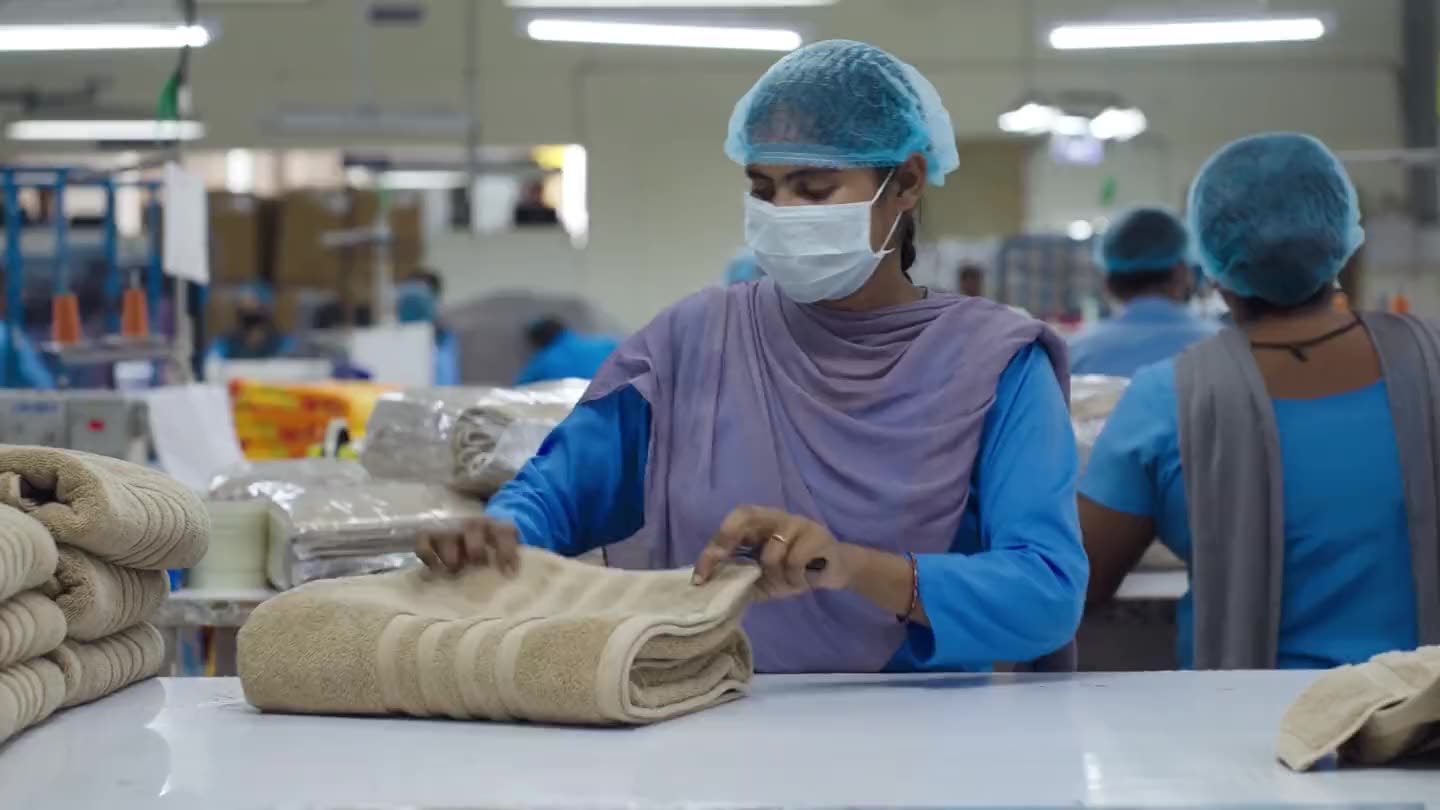
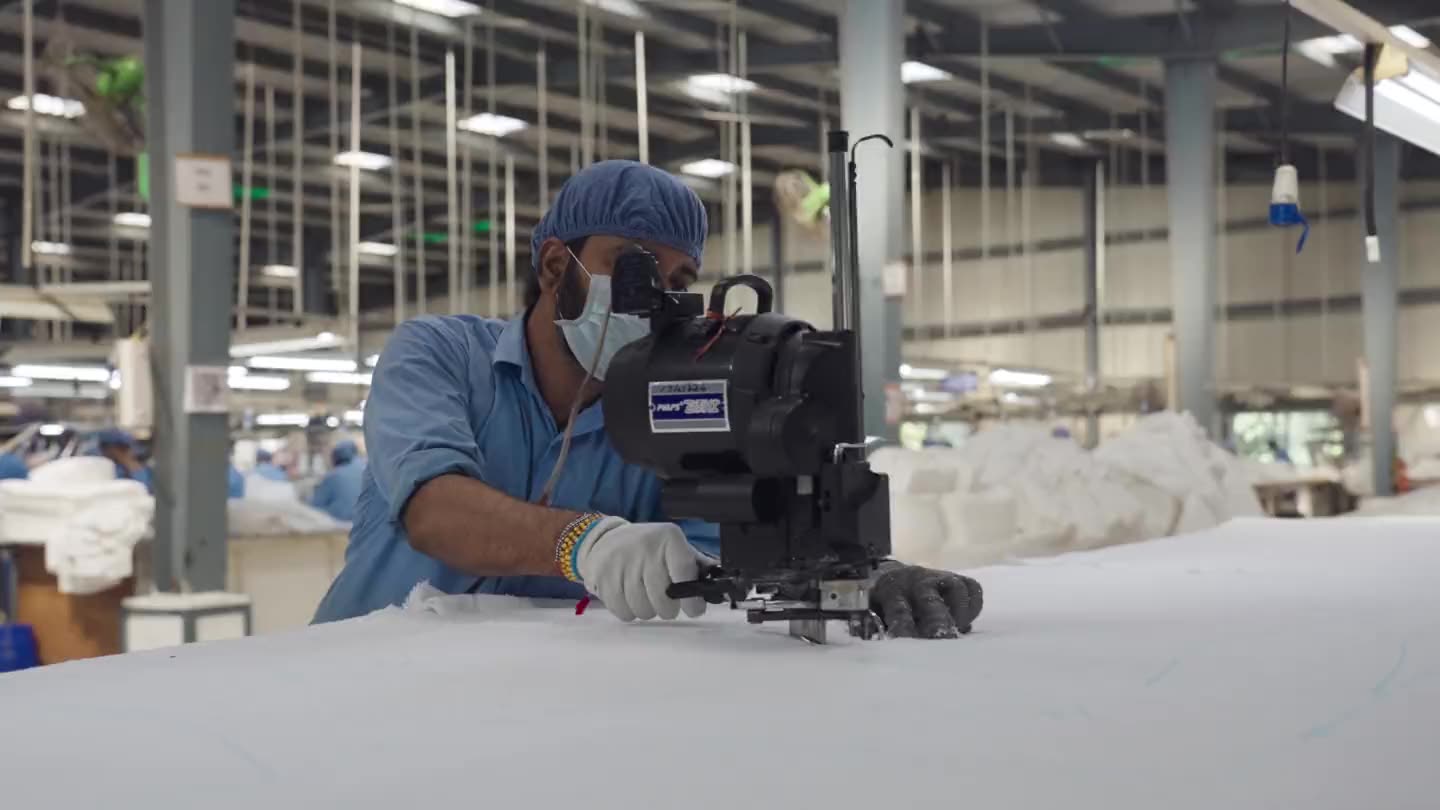
Cloth is cut to length, hemmed, cross-cut and cross-hemmed, then checked piece by piece before polybag and carton packing.
Everything we make ends here. Towels, robes and jersey bedding are three different products but one process — cutting and sewing — run in their own departments to the same discipline. A robe is our own terry, cut and made up; a jersey sheet is our own knitted cloth, cut and made up.
Inspection here is AQL 2.5, applied piece by piece rather than to a sample drawn at the end.
- Products
- Towels · robes · jersey bedding
- Inspection
- AQL 2.5, piece by piece
- Then
- Container loading against the invoice
- Machines
- Juki DDL-8300 and UBT · Brother · Bardy · Zoje · Texpa and Peninsula hemming · Peninsula length cutting
Station 07 · branch
Robes and jersey bedding
Towels are not the only thing cut and sewn here. A robe begins as terry we wove ourselves: the cloth runs the whole line, then goes to the robe department to be cut, sewn and packed. Because the cloth is woven for the robe, the weight, the pile and the border are the buyer’s to specify rather than ours to source.
Jersey bedding arrives from the knitting side and is cut, stitched and packed as sheets, bed covers and pillowcases. Different products, one process, each run in its own department.
- Robes
- Cut, sewn and packed at Nalagarh
- Robe cloth
- Our own terry, woven for the robe
- Bedding
- Sheets, bed covers, pillowcases
- Jersey cloth
- Our own, knitted on site
- Machines
- Juki, Juki UBT, Bardy, Brother · Jack and Pegasus overlock · Kansai flatlock