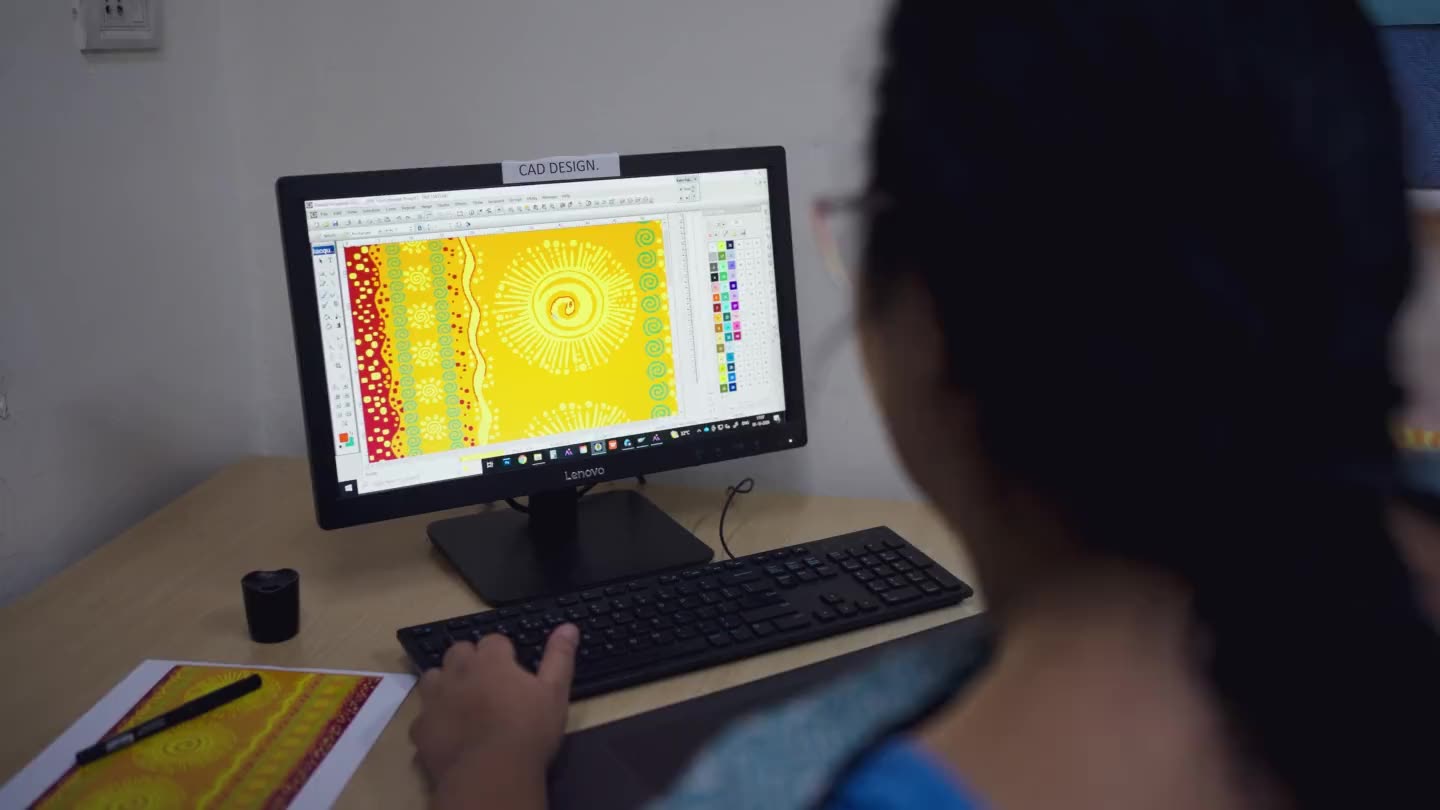
We draw it
A studio with a mill behind it.
Most buyers arrive with a reference and a season. The studio works out what can be woven, what it will cost, and how it will look in the shade you approved — and says so before you commit. Seventy to eighty developments leave this room every month.
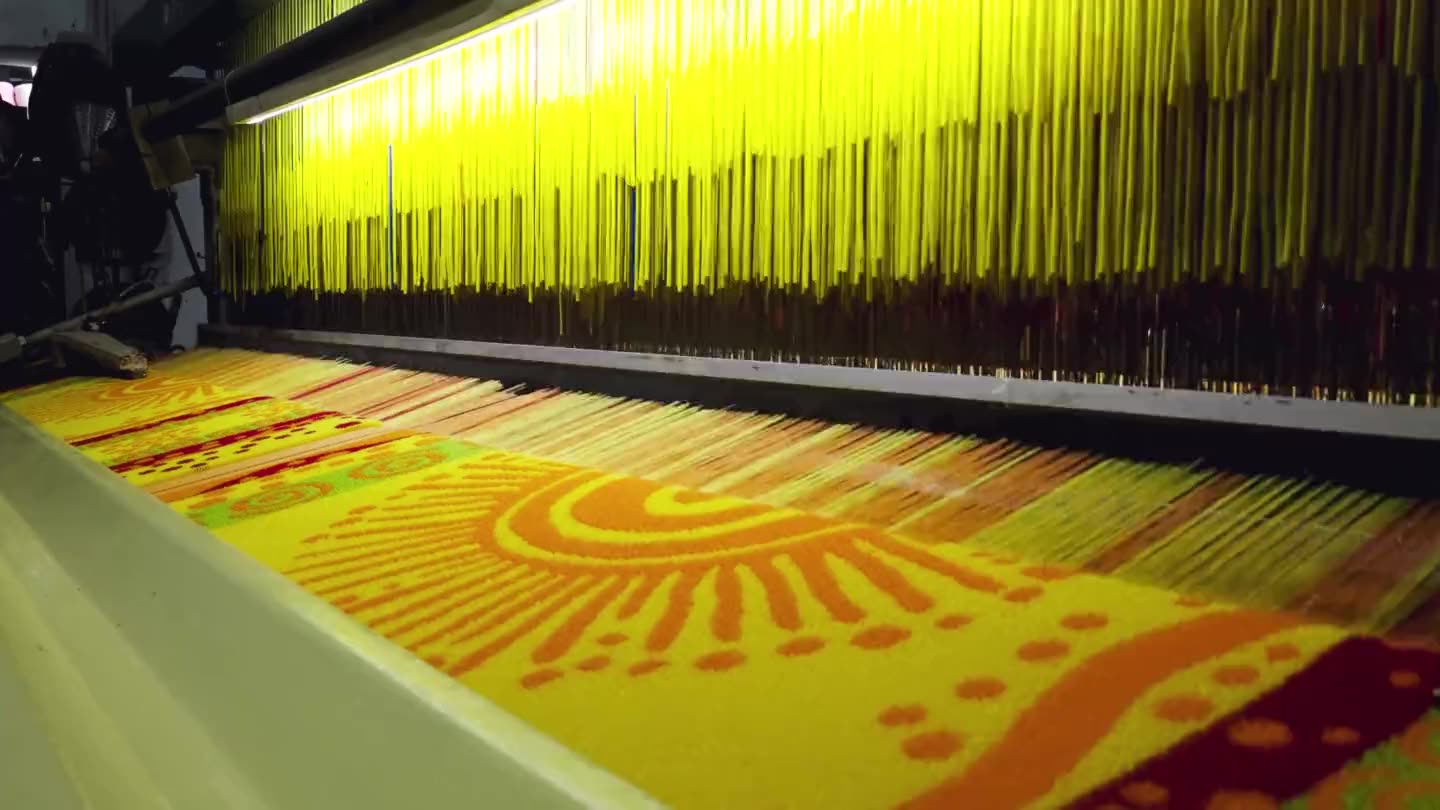
We weave it
A mill with a studio inside it.
A hundred and six looms at Nalagarh — eighty-two dobby, twenty-four jacquard, up to 340 cm wide. Preparatory through to finishing and packing under one roof, with yarn bought to specification rather than spun. The drawing does not leave the building to be made.
Drawn in 2 days → Colour in 5 → Sample in 3 weeks → Bulk on approval
01 — The pairs
A colour developed for you
Your physical standard or a Pantone reference goes to the lab. Three dips come back — a, b and c — and you choose one. Bulk is then held against the dip you approved. If a lot drifts, it is reprocessed rather than shipped.
ΔE < 0.8
Shade tolerance, bulk against approved dip
A construction, not a catalogue number
Terry, jacquard, dobby, zero-twist. Because we buy yarn to specification from four or five mills rather than spinning our own, the count and the origin are yours to choose — including organic and Egyptian.
380–720 GSM
Jacquard · dobby · velour · zero-twist
A sample in your hands in three weeks
Three weeks from brief to a piece-dyed development sample; four to five if it is yarn dyed. Samples run on the same looms as bulk, which is why it is three weeks and not one — and why the date we give you is one we can keep.
3 weeks
Brief to development sample · piece dyed
The heat behind it comes from a crop
Dyeing and finishing is where a mill's energy goes. Both our boilers burn rice husk — the shell left over when rice is milled — so the heat behind every towel comes from something grown rather than something mined. Solar on the shed roofs carries about a fifth of the electricity as well.
930 t
Rice husk burned a month · both boilers, no fossil fuel
02 — What we run
Full range →